
- Home
- Forums
- Talkin Sex Support our Advertisers
- Public Forums
- Sex Industry Discussion
- BDSM: FETISH : FANTASY : GAY:
You are using an out of date browser. It may not display this or other websites correctly.
You should upgrade or use an alternative browser.
You should upgrade or use an alternative browser.
A
AndyRew
No your right, most of them are clothed just not as we are..It is my lament of the current age that just because it is naked, does not mean it is erotic.
A
AndyRew
Mercury has got his little wings on..
A
AndyRew
I'm not saying a clothed person cant be either, look at Humphy Bogart, Yes there's one sculpture there that's in the act of intercourse, Eroticism is only the sexual or erotic quality or character of something. I haven't over sexualised them at all, they are as the artist desired them to be, I merely put them on display here. Here's a nude thats non erotic for ya...

Last edited by a moderator:

User184
New Members
I mean more that the point of erotic sculpture is to embody the sexuality of the naked form.
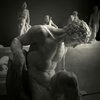
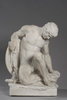
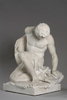
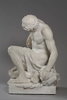
I don't believe that is the point of Penitent Magedlene, or Laocoön and His Sons, or The Faun, or Ugolino and his Sons.
Their purpose is other than to present the ideal human form. For that there are plenty of other examples from the romanticism school.
I don't believe that is the point of Penitent Magedlene, or Laocoön and His Sons, or The Faun, or Ugolino and his Sons.
Their purpose is other than to present the ideal human form. For that there are plenty of other examples from the romanticism school.
A
AndyRew
Then I shall change the name
A
AndyRew
Middle Ages or Medieval Period Sculpture
Middle Ages or Medieval period
In European history, the Middle Ages or Medieval period lasted from the 5th to the 15th century. It began with the collapse of the Western Roman Empire and merged into the Renaissance and the Age of Discovery.
Renaissance period
The Renaissance is a period in Europe, from the 14th to the 17th century, considered the bridge between the Middle Ages and modern history. It started as a cultural movement in Italy in the Late Medieval period and later spread to the rest of Europe, marking the beginning of the Early Modern Age.
Age of Discovery
The Age of Discovery is an informal and loosely defined European historical period from the 15th century to the 18th century, marking the time in which extensive overseas exploration emerged as a powerful factor in European culture.
For a global history of the period between the 5th and 15th centuries, see Postclassical Era.
Last edited by a moderator:
A
AndyRew
Some small part in what you were saying May have be correct....Then I shall change the name
A
AndyRew
' The Discobolus '
Marble statue of an athlete stooping to throw the discus. One of several Roman copies made of a lost bronze original made in the 5th century BC by the sculptor Myron. The head is wrongly restored and should be turned to watch the discus.
2nd century AD


A discus thrower is depicted about to release his throw: "by sheer intelligence", Kenneth Clark observed in The Nude, "Myron has created the enduring pattern of athletic energy. He has taken a moment of action so transitory that students of athletics still debate if it is feasible, and he has given it the completeness of a cameo."The moment thus captured in the statue is an example of rhythmos, harmony and balance. Myron is often credited with being the first sculptor to master this style. Naturally, as always in Greek athletics, the Discobolus is completely nude. His pose is said to be unnatural to a human, and today considered a rather inefficient way to throw the discus. Also there is very little emotion shown in the discus thrower's face, and "to a modern eye, it may seem that Myron's desire for perfection has made him suppress too rigorously the sense of strain in the individual muscles,"Clark observes. The other trademark of Myron embodied in this sculpture is how well the body is proportioned, the symmetria.
The potential energy expressed in this sculpture's tightly wound pose, expressing the moment of stasis just before the release, is an example of the advancement of Classical sculpture from Archaic. The torso shows no muscular strain, however, even though the limbs are outflung.
Marble statue of an athlete stooping to throw the discus. One of several Roman copies made of a lost bronze original made in the 5th century BC by the sculptor Myron. The head is wrongly restored and should be turned to watch the discus.
2nd century AD
A discus thrower is depicted about to release his throw: "by sheer intelligence", Kenneth Clark observed in The Nude, "Myron has created the enduring pattern of athletic energy. He has taken a moment of action so transitory that students of athletics still debate if it is feasible, and he has given it the completeness of a cameo."The moment thus captured in the statue is an example of rhythmos, harmony and balance. Myron is often credited with being the first sculptor to master this style. Naturally, as always in Greek athletics, the Discobolus is completely nude. His pose is said to be unnatural to a human, and today considered a rather inefficient way to throw the discus. Also there is very little emotion shown in the discus thrower's face, and "to a modern eye, it may seem that Myron's desire for perfection has made him suppress too rigorously the sense of strain in the individual muscles,"Clark observes. The other trademark of Myron embodied in this sculpture is how well the body is proportioned, the symmetria.
The potential energy expressed in this sculpture's tightly wound pose, expressing the moment of stasis just before the release, is an example of the advancement of Classical sculpture from Archaic. The torso shows no muscular strain, however, even though the limbs are outflung.
Last edited by a moderator:
A
AndyRew
' Statue of Athena Promachos '
from the Villa of the Papyri at Ercolano
Statue of Athena Promachos from an original sculpture of the 5th century B.C. from the Villa of the Papyri at Ercolano, ancient Herculaneum, province of Naples, Italy, Roman civilization

According to Pausanias, the Greek traveller and geographer of the 2nd century ce, the colossal 30-foot-high bronze seated statue of Athena Promachos (Athena Who Fights in the Foremost Ranks), by the 5th-century-bce Athenian sculptor Phidias, was set up in the open behind the Propylaea, her gleaming helmet and spear visible to mariners off Cape Sunium (Soúnion) 30 miles away. The 6th-century Byzantine emperor Justinian carried the statue off to Constantinople (now Istanbul), just as Phidias’s ivory and gold statue of Athena had been taken from the Parthenon. Both of these masterpieces were lost to other looters in the Crusaders’ sack of Constantinople in 1204. Other statues stood in profusion amid small temples, such as the sculptor Myron’s group of Marsyas and Athena, his Perseus, and his heifer; Phidias’s Lemnian Athena and his Pericles; and a gigantic bronze effigy of the Trojan horse. There was an altar to Athena Hygeia (the Health Giver), a precinct sacred to the goddess Artemis Brauronia (named after a statue of her, brought from the town of Brauron), the Pandroseum (a building named after Pandrosos, a girl associated with Athena in legend), where the sacred olive tree of Athena grew, and beyond the Parthenon the great altar of Athena.
from the Villa of the Papyri at Ercolano
Statue of Athena Promachos from an original sculpture of the 5th century B.C. from the Villa of the Papyri at Ercolano, ancient Herculaneum, province of Naples, Italy, Roman civilization
According to Pausanias, the Greek traveller and geographer of the 2nd century ce, the colossal 30-foot-high bronze seated statue of Athena Promachos (Athena Who Fights in the Foremost Ranks), by the 5th-century-bce Athenian sculptor Phidias, was set up in the open behind the Propylaea, her gleaming helmet and spear visible to mariners off Cape Sunium (Soúnion) 30 miles away. The 6th-century Byzantine emperor Justinian carried the statue off to Constantinople (now Istanbul), just as Phidias’s ivory and gold statue of Athena had been taken from the Parthenon. Both of these masterpieces were lost to other looters in the Crusaders’ sack of Constantinople in 1204. Other statues stood in profusion amid small temples, such as the sculptor Myron’s group of Marsyas and Athena, his Perseus, and his heifer; Phidias’s Lemnian Athena and his Pericles; and a gigantic bronze effigy of the Trojan horse. There was an altar to Athena Hygeia (the Health Giver), a precinct sacred to the goddess Artemis Brauronia (named after a statue of her, brought from the town of Brauron), the Pandroseum (a building named after Pandrosos, a girl associated with Athena in legend), where the sacred olive tree of Athena grew, and beyond the Parthenon the great altar of Athena.
Last edited by a moderator:

A
AndyRew
Seated woman, Greek statue (marble)
ca 5th century BC
(Musée du Louvre, Paris)


ca 5th century BC
(Musée du Louvre, Paris)
Last edited by a moderator:
A
AndyRew
' The Chimaera of Arezzo '
ca. 400 B.C.E
' Notice the goats head emerging from the body '


The large bronze statue—more than 4 ft. long—known as the Chimaera of Arezzo depicts a fantastic compound animal from Greek mythology visualized as a lion with a goat’s head (or protome) emerging from its back and a serpent for a tail ca. 400 B.C.E. shows the creature under attack: the Chimaera, roaring menacingly, draws backward on his haunches as if to spring, with the lion’s claws bared and now-lost eyes originally fixed on an attacker. Walking around the statue or viewing it in QuickTime on the exhibition’s permanent Web site2 reveals that the goat head has flopped over, mortally wounded, as thick droplets of blood gush from both sides of the neck. The lean and sinewy lion’s body has also been wounded: blood spurts from the left (rear) rump, and the small, round hole nearby must document the coup de grâce of a now-lost spear.
ca. 400 B.C.E
' Notice the goats head emerging from the body '
The large bronze statue—more than 4 ft. long—known as the Chimaera of Arezzo depicts a fantastic compound animal from Greek mythology visualized as a lion with a goat’s head (or protome) emerging from its back and a serpent for a tail ca. 400 B.C.E. shows the creature under attack: the Chimaera, roaring menacingly, draws backward on his haunches as if to spring, with the lion’s claws bared and now-lost eyes originally fixed on an attacker. Walking around the statue or viewing it in QuickTime on the exhibition’s permanent Web site2 reveals that the goat head has flopped over, mortally wounded, as thick droplets of blood gush from both sides of the neck. The lean and sinewy lion’s body has also been wounded: blood spurts from the left (rear) rump, and the small, round hole nearby must document the coup de grâce of a now-lost spear.
Last edited by a moderator:
A
AndyRew
' THE CYCLIST '
Grzegorz Gwiazda
Sculpture Competition 2015

Grzegorz Gwiazda
Sculpture Competition 2015
Last edited by a moderator:
A
AndyRew
' Gladiateur Mourant '
(Dying Gladiator)
Pierre Julien
1779
Way back in in 1779, French artist Pierre Julien created this powerful sculpture titled Gladiateur Mourant (Dying Gladiator). Fast forward a couple of centuries later and photographer Yvan Lemur took this dramatic photo of the marble statue at the Louvre in Paris. His lighting and composition make this shot extraordinary!
The End..........
(Dying Gladiator)
Pierre Julien
1779
Way back in in 1779, French artist Pierre Julien created this powerful sculpture titled Gladiateur Mourant (Dying Gladiator). Fast forward a couple of centuries later and photographer Yvan Lemur took this dramatic photo of the marble statue at the Louvre in Paris. His lighting and composition make this shot extraordinary!
The End..........
Attachments
Last edited by a moderator:

Photos of sculpture do nothing for me, yet when I am viewing the real thing, I am in awe and can feel the craftsmanship.
A
AndyRew
Actually yes your right, photos do nothing for me either..........